

Leg Locks BJJ: Heel Hooks, Kneebars, and the Revolution That Changed Grappling
For decades, leg locks were treated like the shady back alley of Brazilian Jiu-Jitsu. Respected coaches warned students away from them. Entire academies banned heel hooks from sparring. The conventional wisdom held that attacking the legs was somehow cheap, unsophisticated, or outright dangerous — and that real grapplers focused on passing guard and working from the top.
That era is over. The leg lock revolution didn’t just knock on the door of competitive BJJ — it kicked it down, applied an inside heel hook, and made the entire sport tap. Today, no serious grappler can afford to ignore lower body attacks, and the athletes who specialize in them are among the most feared competitors on the planet.

This guide breaks down the major leg lock submissions, the positions that make them work, the athletes who brought them into the spotlight, and what every practitioner from white belt to black belt needs to understand about the modern leg lock game.
Why Leg Locks Were Taboo for So Long
The prejudice against leg locks in traditional BJJ has deep roots. When the Gracie family codified jiu-jitsu for competition, the emphasis fell heavily on positional hierarchy: mount, back control, side control. Submissions from these positions — rear naked chokes, armbars, cross chokes — were considered the “correct” way to finish a fight. Leg attacks, which could be launched from bottom position or from neutral entanglements, disrupted that positional hierarchy entirely.
IBJJF rules reinforced this bias. Heel hooks were (and still are) banned in gi competition at all belt levels. Kneebars and toe holds are restricted for lower belts. The rationale was safety — leg locks can cause damage quickly, and the knee joint doesn’t offer the same gradual pain warning as an armbar. A heel hook can tear ligaments before you feel significant discomfort, which makes tapping early absolutely critical.
But safety concerns alone don’t explain the cultural disdain. Many old-school practitioners viewed leg locks as shortcuts — moves that allowed less skilled grapplers to snag wins without demonstrating real positional dominance. In some academies, hitting a leg lock in sparring was about as welcome as bringing a skateboard to a ballet recital.

Dean Lister — the ADCC champion who famously asked a young John Danaher, “Why would you ignore 50% of the human body?” Photo: Wikimedia Commons, CC BY-SA 3.0
The Four Primary Leg Lock Submissions
Every leg lock system revolves around four core submissions. Each targets different structures in the lower body, carries different levels of risk, and requires different finishing mechanics.
The Straight Ankle Lock (Achilles Lock)
The most fundamental leg lock in BJJ and the first one most practitioners learn. The straight ankle lock targets the ankle joint by applying pressure across the Achilles tendon. You trap the opponent’s foot in your armpit, grip your hands together (typically in a figure-four or RNC grip), arch your hips forward, and create a breaking force against the ankle.
This is the only leg lock attack available to white belts under IBJJF rules, and it’s legal at every belt level in both gi and no-gi. Don’t mistake its accessibility for weakness — a properly applied ankle lock generates enormous force. In the gym, it’s the safest leg lock to drill because it produces clear pain signals before causing structural damage, giving your training partner time to tap.

The Kneebar
A kneebar works on the same principle as an armbar but targets the knee joint instead of the elbow. You isolate the opponent’s leg, pinch it between your thighs, control the ankle, and extend your hips to hyperextend the knee. The pressure goes directly into the anterior cruciate ligament (ACL) and surrounding structures.
Kneebars become available at brown belt and above under IBJJF rules, though they’re permitted at all levels in most no-gi rule sets (ADCC, sub-only events, and UFC BJJ). The finishing position resembles an armbar — your hips are the fulcrum, and the leverage is devastating. Athletes who neglect kneebar defense often find themselves tapping from positions they thought were safe.
The Toe Hold
The toe hold attacks the ankle and knee simultaneously by rotating the foot. You grip the opponent’s toes and forefoot with a kimura-style grip, then twist the foot laterally while controlling their hip with your legs. The torque travels up through the ankle into the knee, threatening ligament damage at both joints.
IBJJF allows toe holds starting at brown belt in gi competition. In no-gi formats, they’re generally legal for all adult competitors. The toe hold is particularly effective as a counter to leg lock defense — when an opponent frees their heel from a heel hook attempt, the toe hold is often right there waiting. Half guard players who get tangled in leg entanglements frequently encounter toe hold threats.
The Heel Hook
The most powerful and controversial leg lock in BJJ. Heel hooks attack the knee by rotating it against its natural axis. You control the opponent’s heel in the crook of your elbow, pin their toes against your chest, and rotate your entire body — the twisting force travels through the heel into the knee, attacking the meniscus and multiple ligaments simultaneously.
There are two varieties. The outside heel hook attacks with external rotation of the opponent’s foot, primarily stressing the LCL and anterolateral structures. The inside heel hook applies internal rotation, attacking the MCL, ACL, and meniscus. The inside heel hook is generally considered more dangerous and more effective at high levels.

Ryan Hall brought heel hooks into the UFC octagon, finishing multiple opponents with Imanari rolls into leg entanglements. Photo: Wikimedia Commons, CC BY 3.0
Heel hooks are completely banned in IBJJF gi competition. In IBJJF no-gi, they were finally legalized for brown and black belts in 2021 — a watershed moment that acknowledged the submission’s importance in modern grappling. In ADCC, CJI, and most professional sub-grappling events, heel hooks are the single most common finishing submission.
Leg Lock Positions: The Entanglement Game
You can’t finish a leg lock without first controlling the leg, and that control comes from specific entanglement positions. Modern leg lock systems are defined less by the submissions themselves and more by the positional framework used to get there.
Single Leg X (Ashi Garami)
The foundation of leg lock attacks. In standard ashi garami, you control one of the opponent’s legs between your legs, with your outside foot on their hip acting as a frame. From here, you can attack straight ankle locks and transition to deeper entanglements. It’s the entry point for the entire system.

50/50
Both competitors have mirrored leg entanglements, each controlling one of the other’s legs. The 50/50 was once considered a stalling position in gi competition, but the leg lock revolution transformed it into one of the most dangerous entanglements in no-gi. From 50/50, both athletes can attack heel hooks simultaneously, creating a race to the finish. Lachlan Giles built an entire championship-caliber game around 50/50 entries from guard at ADCC 2019.
The Saddle (Inside Sankaku / Honeyhole)
The most dominant leg lock position. In the saddle, your legs form a triangle around the opponent’s trapped leg, with your inside knee threaded between their legs. This position offers maximum control — it’s extremely difficult for the opponent to extract their leg — and provides direct access to inside heel hooks, the highest-percentage finish in modern grappling.
The saddle goes by many names depending on who’s teaching. Eddie Cummings and the Danaher Death Squad called it the “inside sankaku.” Competitors from 10th Planet refer to it as the honeyhole. Regardless of the label, the mechanics are identical: trap, control, and destroy.
Outside Ashi and Cross Ashi
Variations where your hips are positioned on the outside of the opponent’s leg rather than between their legs. These positions favor outside heel hooks and kneebars. Cross ashi (also called “outside sankaku” or “411”) involves crossing your feet across the opponent’s hips for maximum control. Competition grapplers frequently chain between inside and outside entanglements, following the opponent’s escape attempts with transitions rather than brute force.
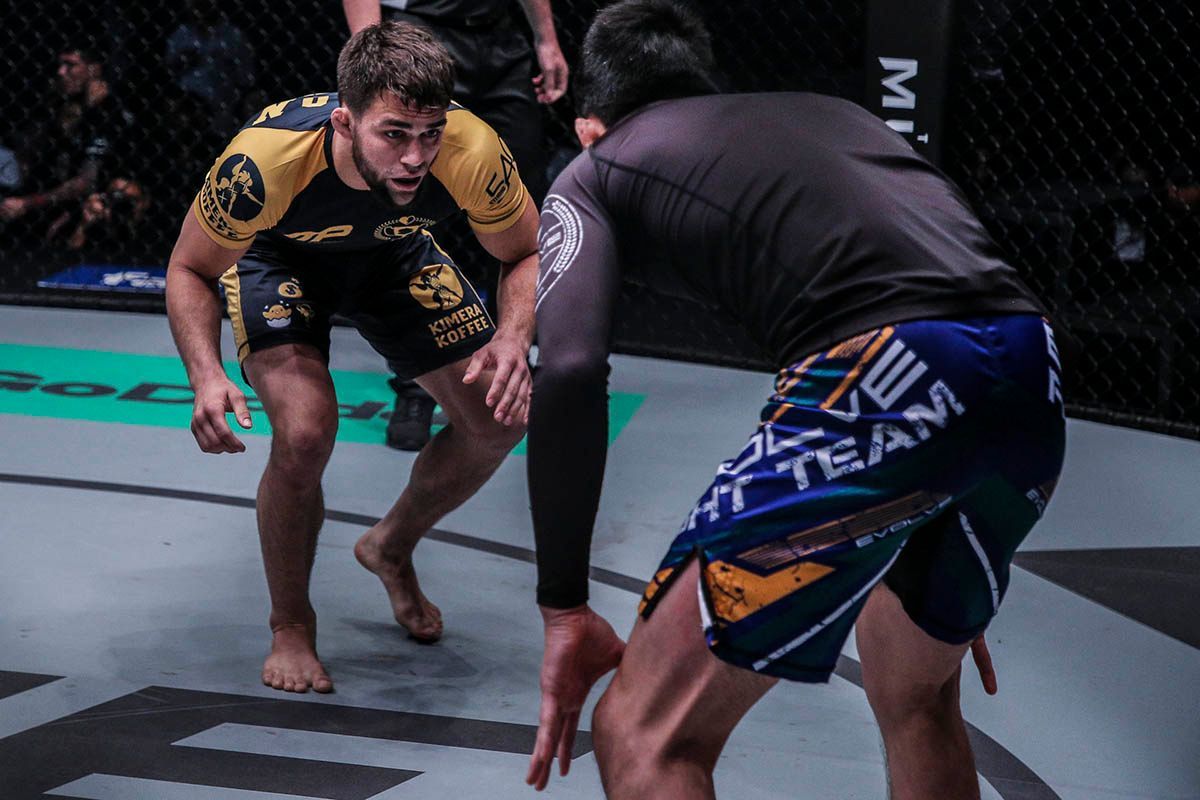
Garry Tonon — one of the original Danaher Death Squad members whose relentless leg attacks helped legitimize the modern heel hook game. Photo: Wikimedia Commons, CC BY-SA 4.0
Athletes Who Changed the Game
The leg lock revolution didn’t happen by accident. Specific individuals pushed the boundaries and proved that lower body attacks belonged at the highest levels of competition.
Dean Lister
The godfather. Long before the Danaher Death Squad existed, Dean Lister was submitting world-class grapplers with leg locks at ADCC. His 2003 ADCC gold medal run showcased a leg lock arsenal decades ahead of its time. More importantly, Lister reportedly asked a young John Danaher a question that would reshape grappling history: “Why would you ignore 50% of the human body?” That simple question sparked Danaher’s obsession with systemizing leg attacks.
John Danaher and the Danaher Death Squad
If Lister planted the seed, Danaher grew the forest. Working out of the Renzo Gracie Academy blue basement in New York City, Danaher developed a comprehensive leg lock system built on clear mechanical principles: control the knee line, establish an entanglement, strip the opponent’s defensive grips, and finish with maximum rotational force.
His students — Gordon Ryan, Garry Tonon, Eddie Cummings, and Nicky Ryan — became a wrecking crew in no-gi competition. They won EBI events with heel hooks. They medaled at ADCC with heel hooks. They forced the entire grappling world to either develop leg lock defense or keep getting submitted.

Gordon Ryan perfected the Danaher system and used it to dominate ADCC at every weight class. Photo: Wikimedia Commons, CC BY 3.0
Lachlan Giles
The Australian black belt’s performance at ADCC 2019 might be the single greatest leg lock showcase in grappling history. Competing in the absolute (open weight) division at just 76 kg, Giles submitted both Kaynan Duarte and Patrick Gaudio — two of the biggest, strongest competitors in the tournament — with identical inside heel hooks from 50/50. He proved that a well-developed leg lock system could neutralize massive size and strength advantages, inspiring an entire generation of smaller grapplers to invest in lower body attacks.
Ryan Hall
While most leg lock specialists competed in grappling events, Ryan Hall brought the game into MMA. The former Ultimate Fighter winner finished multiple UFC opponents with Imanari rolls — diving entries into leg entanglements from standing — followed by heel hooks. Hall proved that leg locks weren’t just a grappling curiosity but a viable fight-ending weapon under full MMA rules, where ground-and-pound and standing up are always options.
Mikey Musumeci
The multiple-time IBJJF World Champion demonstrated that leg locks could coexist with traditional guard play. Musumeci’s game integrates intricate guard systems with leg entanglement entries, showing that the best modern competitors don’t choose between upper body and lower body attacks — they flow between both.

Mikey Musumeci — proving that elite leg lock skills and traditional BJJ mastery aren’t mutually exclusive. Photo: Wikimedia Commons, Public Domain
Building Your Leg Lock Game: Where to Start
If you’re new to leg locks, the sheer volume of positions, entries, and submissions can feel overwhelming. Here’s a practical roadmap for developing your skills progressively.
Phase 1: The Straight Ankle Lock
Master this first. Learn proper finishing mechanics — the “boot” grip, hip extension, shoulder-to-shoulder break. Practice entering ashi garami from common guard passing situations and from bottom positions. The straight ankle lock teaches you the fundamentals of foot isolation, hip positioning, and lower body control that translate directly into more advanced attacks.
Phase 2: Positional Control
Before you start chasing heel hooks, learn to hold and transition between leg entanglement positions. Drill ashi garami, 50/50, and the saddle as control positions — not just as launching pads for submissions. The best leg lockers in the world spend far more time on positional control than on finishing mechanics. If you can hold someone in the saddle for two minutes without them escaping, the submission will present itself.

Phase 3: Heel Hooks and Advanced Finishes
Once your positional game is solid, add inside and outside heel hooks. The critical detail most beginners miss: heel hooks are finished with body rotation, not arm strength. Your arms hold the heel in place while your entire torso rotates to create the breaking force. Practice slowly with trusted training partners and always, always tap early when caught — knee injuries from heel hooks can require surgical reconstruction and months of rehabilitation.
Phase 4: Defense and Escape
Arguably the most important phase. Understanding how to defend leg locks is just as critical as knowing how to apply them. The fundamental defensive principles include: keeping your knees together (the “knee squeeze”), straightening the attacked leg to relieve rotational pressure, boot defense (hiding your heel by pointing your toes), and knowing when to concede position rather than risk injury.
A grappler who can attack with heel hooks but can’t defend them is a liability to themselves and their training partners. Build defense alongside offense from day one.
Leg Locks in Competition: Rules You Need to Know
Different rule sets treat leg locks very differently, and understanding these distinctions is essential for competitors.
IBJJF Gi: Straight ankle locks only for white through purple belt. Toe holds and kneebars added at brown belt. Heel hooks completely banned at all levels. Reaping the knee (a leg entanglement position) is also illegal, which effectively prevents most modern leg lock entries.
IBJJF No-Gi: Similar progression, but heel hooks are now permitted for brown and black belts as of the 2021 rule change. This was a seismic shift — suddenly, the world’s largest BJJ organization acknowledged the legitimacy of the submission that had been dominating professional grappling for years.
ADCC: All leg locks legal from the start of the match, including heel hooks and reaping. This rule set has produced the most dramatic leg lock finishes in grappling history and remains the gold standard for testing complete no-gi games.
Submission-only events (EBI, CJI, Polaris): Typically allow all leg locks. These formats, where the only path to victory is submission, naturally reward leg lock specialists who can find finishes from any position.
Common Mistakes and Misconceptions
Even experienced grapplers fall into traps when developing their leg lock game. Here are the most frequent errors:
Grabbing the heel too early. Beginners rush to grip the heel before establishing proper entanglement control. The opponent simply pulls their leg free, and the attacker ends up in a bad position. Control the position first, then hunt the finish.
Neglecting upper body attacks. The best leg lockers use upper body threats to set up lower body attacks and vice versa. If you only attack legs, smart opponents will develop specific counters. Mix your attacks — a guillotine threat from front headlock can create the opening for a leg entry, and a leg lock attempt can expose the back.
Training heel hooks at full speed. This gets people hurt. Heel hooks should be drilled at controlled speed with clear communication between partners. “Catch and release” — entering the position and establishing the grip without cranking — is how you build thousands of reps safely over a career.
Ignoring the leg lock game entirely. Some practitioners still believe they can avoid leg locks by “just standing up” or “just passing guard.” This works until it doesn’t. In any no-gi environment where heel hooks are legal, you will encounter leg lock attacks. Not knowing how to defend them is like not knowing how to swim while living on a boat — technically optional, but catastrophically risky.
The Future of Leg Locks in BJJ
The leg lock revolution isn’t slowing down. If anything, the game is becoming more sophisticated. Athletes are developing new entries from guards like K-guard (pioneered by Lachlan Giles), creating seamless transitions between upper and lower body attacks, and finding leg lock opportunities from positions that were previously considered “safe.”
The rise of professional grappling organizations — ADCC expanding, CJI offering massive prize purses, and major media platforms broadcasting events globally — has put enormous competitive pressure on athletes to develop complete games that include leg lock offense and defense. The days of ignoring 50% of the body are permanently over.
For practitioners at every level, the message is straightforward: learn the positions, understand the mechanics, respect the danger, and start integrating leg attacks into your training. The modern BJJ landscape belongs to complete grapplers, and completeness demands fluency in the leg lock game.
Whether you’re a white belt learning your first straight ankle lock or a black belt refining your saddle entries, the leg lock system offers a lifetime of study. Dean Lister’s question echoes louder than ever — and the entire sport is finally listening.


 English
  Chinese