

WNO 32 Announces Lightweight Grand Prix for Vacant Title
Who’s Number One is back, and this time the stakes couldn’t be higher. WNO 32, scheduled for March 31, 2026, in Austin, Texas, will feature a four-man lightweight grand prix that brings together some of the most dangerous grapplers in the 155-pound division. The winner earns a direct path to a title shot against reigning WNO lightweight champion Diego “Pato” Oliveira—one of the most submission-heavy champions in the promotion’s history.
The Grand Prix Format and What’s at Stake
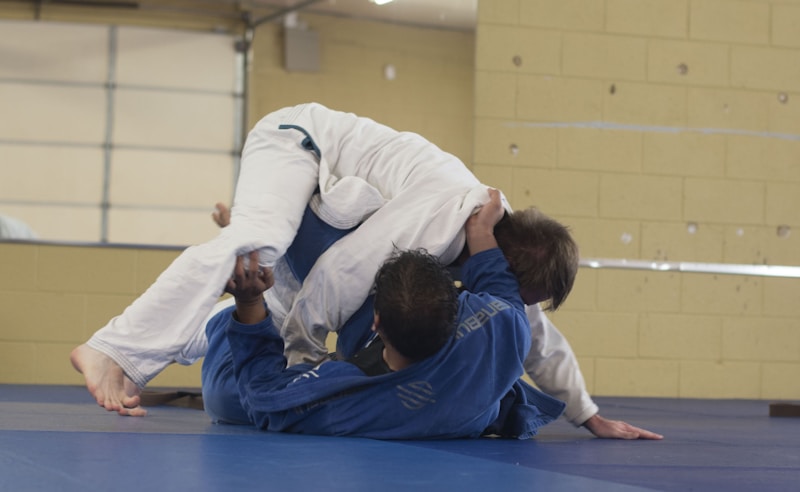
The WNO 32 Lightweight Grand Prix is a four-man, single-elimination bracket. Two semifinal matches will take place early in the event, with the winners meeting in the final later that evening. All matches will be contested under WNO’s submission-focused rule set—15-minute time limits, with points scored for positional dominance, near submissions, and submission attempts. Heel hooks, leg locks, and all submissions are legal.
The real prize isn’t a belt or a trophy—it’s position. The grand prix winner will be the mandatory challenger for Diego “Pato” Oliveira’s WNO lightweight title, a belt Oliveira has defended multiple times and holds with an iron grip. Given Oliveira’s reputation as one of the most technically gifted lightweights in the world, earning the right to face him is both an honor and a serious challenge.
The full event streams live on FloGrappling, which has served as WNO’s exclusive broadcast partner since the promotion’s early days.
The Four Competitors: Breaking Down the Bracket
WNO has assembled four of the most dangerous lightweights in competitive grappling. Each man brings a distinct style, and each has legitimate credentials that make this one of the most unpredictable grand prix brackets in recent memory.
Deandre Corbe — Standard Jiu-Jitsu
Deandre Corbe was the first name announced for the bracket, and he comes in with perhaps the most compelling argument of any competitor: he already has a win over the champion. Corbe defeated Diego “Pato” Oliveira in the semifinal of the Sapateiro World Championship 2025, earning a decision victory in a closely contested match.
Corbe represents Standard Jiu-Jitsu and has developed a reputation as a gritty, hard-to-beat competitor who thrives in close matches. He doesn’t always get the flashiest finishes, but his ability to grind out decisions against elite competition sets him apart. Under WNO’s rule set, where positional dominance and aggression are rewarded, Corbe’s pressure-based style could serve him well.
His path to the final might depend on his ability to impose his game early. In a short tournament format where fatigue accumulates quickly, Corbe’s conditioning and mental toughness could be decisive factors.

Max Hanson — Canadian Black Belt
Max Hanson is one of the most prolific competitors on the professional grappling circuit. The Canadian black belt competes with remarkable frequency across promotions throughout the United States, and he maintains an impressively high finishing rate despite the volume of matches he takes.
Hanson’s game is built around aggression and submission hunting. He doesn’t coast to decisions—he looks for the finish. In a grand prix format where the ability to close out matches quickly matters (you have to fight twice in one night), Hanson’s finishing instinct is a major asset.
There’s a rivalry dimension here too. Hanson and Corbe have faced each other before, with Corbe getting the better of the exchange back in 2024. Hanson will be eager to settle that score if they meet in the bracket. Beyond that, Hanson and Julian Espinosa are currently locked at 1-1 in their head-to-head series, adding another potential trilogy dimension to the night.
Julian Espinosa — The Pace Killer
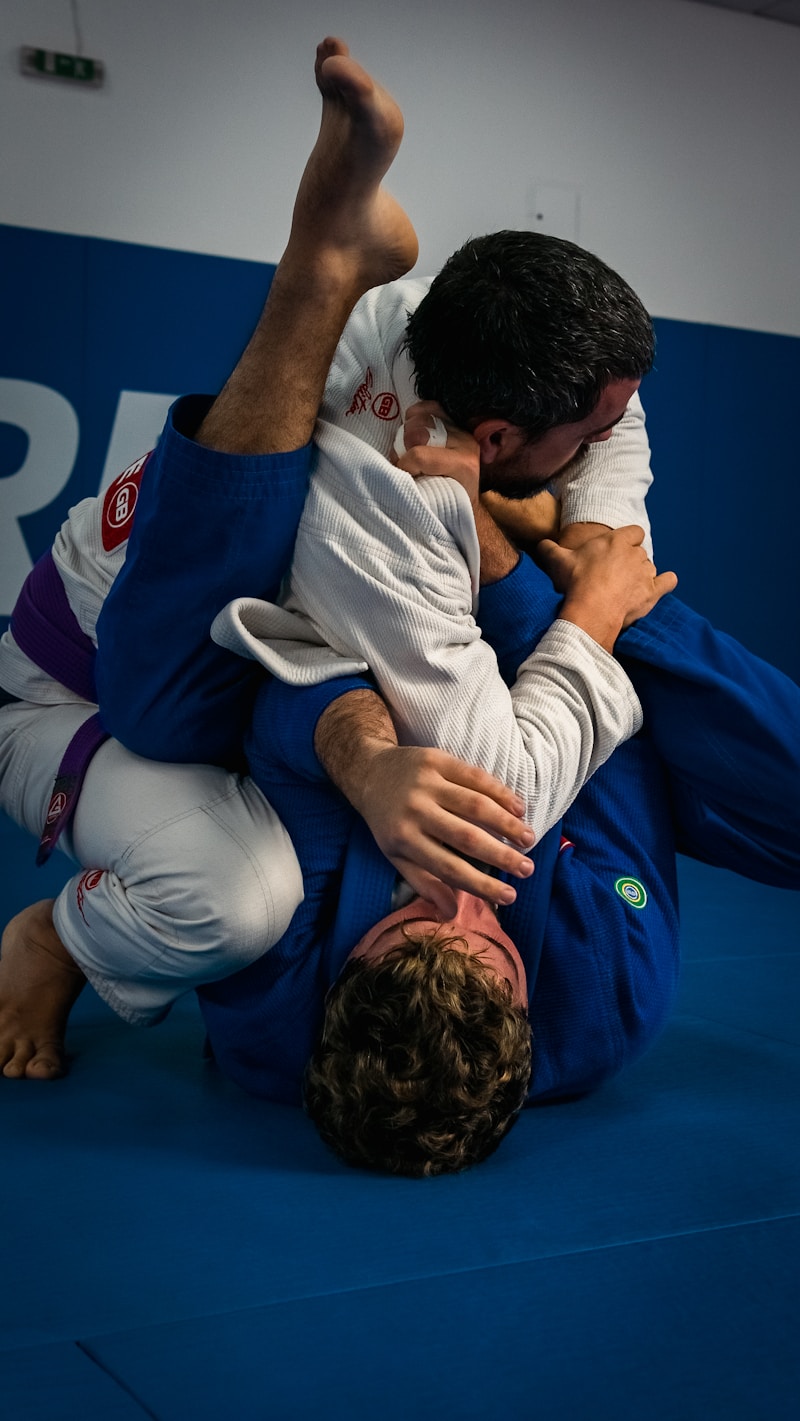
Julian Espinosa brings something different to this bracket: pace. While other competitors might play tactical, defensive games in the early minutes, Espinosa is known for relentless attacks from the opening bell. He pressures opponents with constant movement, chain attacks, and a refusal to let the match settle into a rhythm that favors his opponent.
His finishing rate is comparable to Hanson’s, but the methods differ. Where Hanson might methodically work to a submission, Espinosa overwhelms opponents with volume. He throws attacks in bunches—passing attempts, submission entries, guard sweeps—forcing his opponents to react rather than initiate.
In a grand prix format, this style cuts both ways. If Espinosa can finish his semifinal quickly, he’ll carry momentum and energy into the final. But if he gets dragged into a grinding 15-minute war in the first round, that pace might not be sustainable for a second match later in the evening.
Dorian Olivarez — The Wrestler
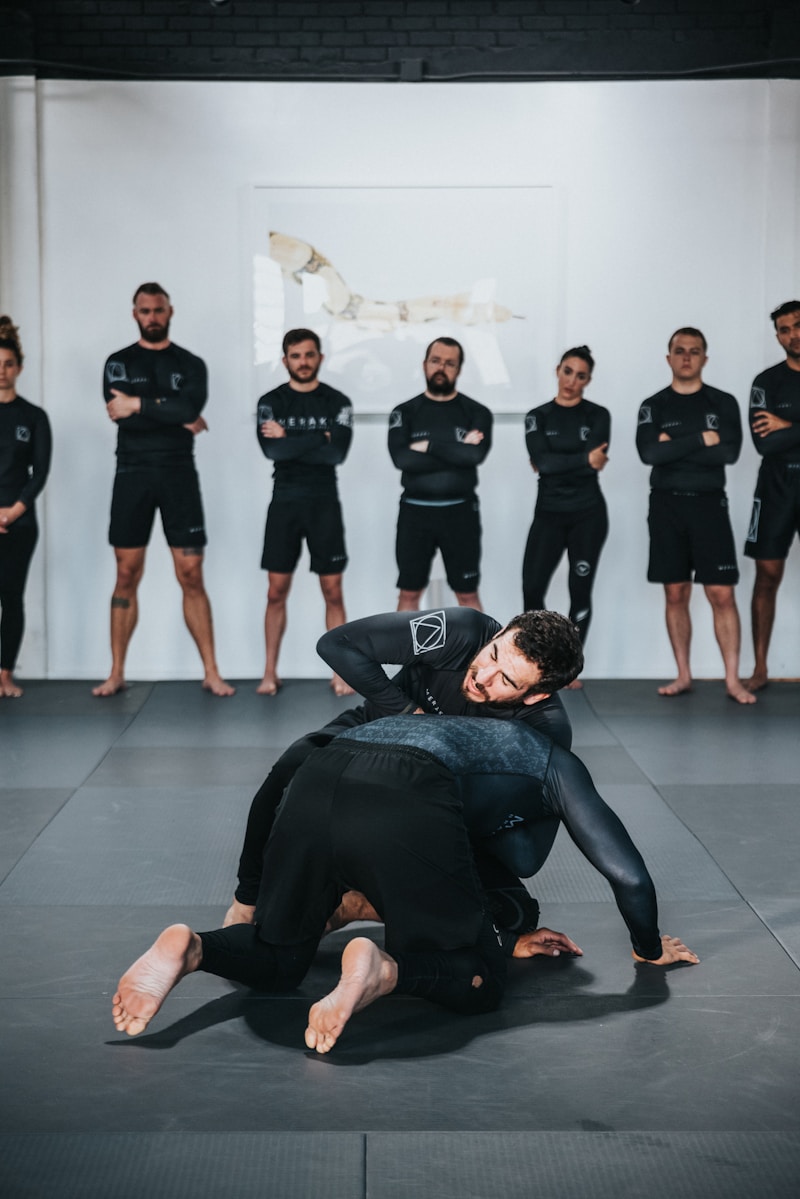
Dorian Olivarez brings the most stylistically distinct approach of any competitor in the bracket. While Corbe, Hanson, and Espinosa are primarily guard players and submission hunters, Olivarez is an elite wrestler and top player who breaks opponents down from above.
His game plan is straightforward but brutally effective: take the opponent down, pass the guard, establish dominant position, and either force a submission through crushing pressure or expose the back for a rear naked choke. In a rule set that awards points for positional dominance, Olivarez’s ability to hold top position and relentlessly advance is a massive scoring threat.
Olivarez is the kind of opponent that the other three competitors probably don’t want to draw in the semis. His wrestling-heavy style can neutralize flashy guard games and force matches to be fought on his terms. If he gets on top, getting out from under him is a monumental task.
Diego “Pato” Oliveira: The Champion Watching

Diego “Pato” Oliveira won’t be competing at WNO 32, but his shadow looms over the entire event. The reigning WNO lightweight champion has been one of the most active and dominant titleholders in the promotion’s history.
Oliveira defended his belt against Keith Krikorian at WNO 26 in February 2025, winning by unanimous decision in a match that showcased his ability to control distance and dictate the pace against one of the most dangerous leg lockers at 155 pounds. He was scheduled to defend again against Deandre Corbe at WNO 31 in December 2025.
What makes Oliveira so difficult to prepare for is his versatility. He’s comfortable playing guard, passing guard, attacking from top, and hunting submissions from everywhere. His nickname “Pato” (Portuguese for “duck”) belies his predatory approach on the mats—he’s one of the most well-rounded lightweights in grappling history.
Whoever emerges from the WNO 32 Grand Prix will need to bring their absolute best to dethrone him.
WNO’s History: From Pandemic Project to Premier Promotion
Who’s Number One launched in 2020 during the COVID-19 pandemic, when most grappling events had shut down. FloGrappling saw an opportunity to fill the void, creating a promotion that would feature superfight cards with the best grapplers in the world competing under a unique rule set.
The promotion quickly evolved from a pandemic-era experiment into one of the most prestigious stages in professional grappling. By introducing championship belts, grand prix tournaments, and consistent cards throughout the year, WNO carved out a niche that complemented ADCC (which runs every two years) and the IBJJF circuit.
WNO events have hosted some of the most memorable matches in recent grappling history. Gordon Ryan’s superfights, Mikey Musumeci’s flyweight dominance, and dramatic title fights have all taken place on the WNO stage. The promotion has also served as a proving ground for rising stars—many of the names on the WNO 32 card built their reputations through earlier WNO appearances.
With 32 events now in the books, WNO has established itself as a cornerstone of the competitive grappling calendar. The March 31 event continues what has become an annual tradition of opening the year’s WNO schedule in Austin, Texas.
The Lightweight Division: Why It Matters
The lightweight division (155 pounds / 70 kg) has always been one of the most compelling weight classes in grappling. It sits at the intersection of speed and technique—lightweights are fast enough to create explosive scrambles but technical enough to produce intricate submission exchanges.
Historically, the lightweight division has been home to some of the biggest names in no-gi grappling. Competitors like Garry Tonon, Renato Canuto, and Geo Martinez built their legacies in this weight class. The current generation—Oliveira, Corbe, Hanson, Espinosa, Olivarez—represents a new wave that’s arguably deeper and more competitive than ever.
What makes the WNO lightweight grand prix particularly exciting is the stylistic diversity. You have a wrestler (Olivarez), a pace-pusher (Espinosa), a high-volume finisher (Hanson), and a battle-tested grinder (Corbe). The interactions between these different approaches should produce dynamic, unpredictable matches.
Predictions and Matchup Analysis
Without the official semifinal pairings announced yet, we can speculate on the most interesting potential matchups:
Corbe vs. Olivarez would be a classic guard player vs. wrestler clash. Corbe would want to pull guard and work his game from bottom, while Olivarez would look to keep things standing or grind from top. This is the kind of match where the first minute often determines the trajectory—if Olivarez gets the takedown, it’s an uphill battle for Corbe.
Hanson vs. Espinosa would be a firefight. Both men have high finishing rates and aggressive styles, but Espinosa’s pace might give him an edge in the early minutes. If Hanson can weather the initial storm, his technical precision could take over in the second half of the match. Their series is tied 1-1, which adds narrative weight.
Corbe vs. Espinosa or Hanson vs. Olivarez would create equally compelling contrasts. The beauty of this bracket is that there are no easy matches—every possible combination produces an interesting stylistic clash.
How to Watch WNO 32
WNO 32 takes place on March 31, 2026 in Austin, Texas. The event streams live and exclusively on FloGrappling, which requires a subscription. In addition to the lightweight grand prix, the card will feature several superfight matchups and a youth tournament.
For fans who can’t watch live, FloGrappling typically makes replays available shortly after the event concludes. Post-event analysis and highlights are also available on FloGrappling’s YouTube channel and social media.
What This Grand Prix Means for the Lightweight Division
The WNO 32 Lightweight Grand Prix isn’t just about crowning a number-one contender. It’s about establishing the pecking order in one of grappling’s deepest weight classes. With the competitive grappling landscape more crowded than ever—WNO, ADCC, CJI, UFC BJJ, and various international promotions all vying for top talent—performances at events like this have ripple effects across the entire sport.
A dominant grand prix performance could elevate any of these four men into legitimate superstar status. Conversely, an early upset loss could send a top contender back to the drawing board. That’s the beauty of the tournament format—it compresses months of matchmaking into a single night of consequences.
March 31 in Austin. Four men. One shot at the champion. The lightweight division is about to get a whole lot clearer—or a whole lot more chaotic.


 English
  Chinese